Factory-Direct Prices · Duties & Taxes Included · 30-Day Returns
Home / Guides / Plate Carrier Setup Guide
Guide
Plate Carrier Setup Guide
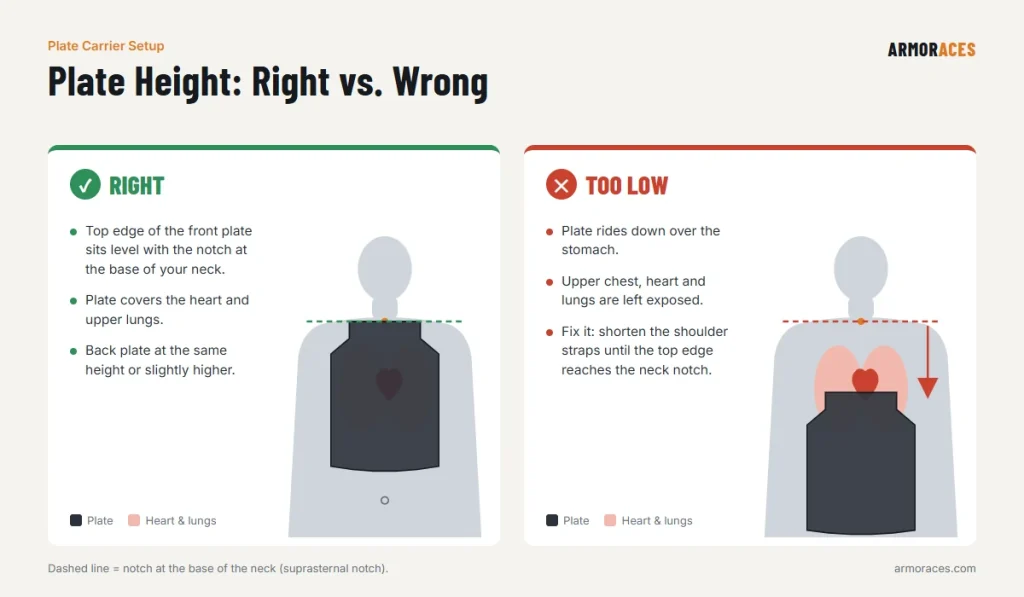
A good plate carrier setup starts with plate height: the top of the front plate should sit at the notch at the base of your neck. Then adjust the shoulder straps, fit the cummerbund snugly, and keep the loadout light: one or two magazines, a med kit and a light are enough for most civilians.
Step 1 – Put the Plates In the Right Way
-
Strike face (marked "This Side Out" or "Strike Face") faces away from your body.
-
Shooter's cut corners go up.
-
Front and back plates should be the same size.
Step 2 – Set Plate Height
1
Put the carrier on and loosen the cummerbund.
2
Adjust the shoulder straps until the top edge of the front plate sits level with your suprasternal notch.
3
The back plate should sit at the same height or slightly higher. A low back plate is a common mistake.
Step 3 – Fit the Cummerbund
-
Wrap it snug enough that the carrier doesn't bounce when you jog, but you can still take a full breath.
-
If you use side plates, center them under your armpits.
Step 4 – Plan Your Loadout
Position
Suggested gear
Front center
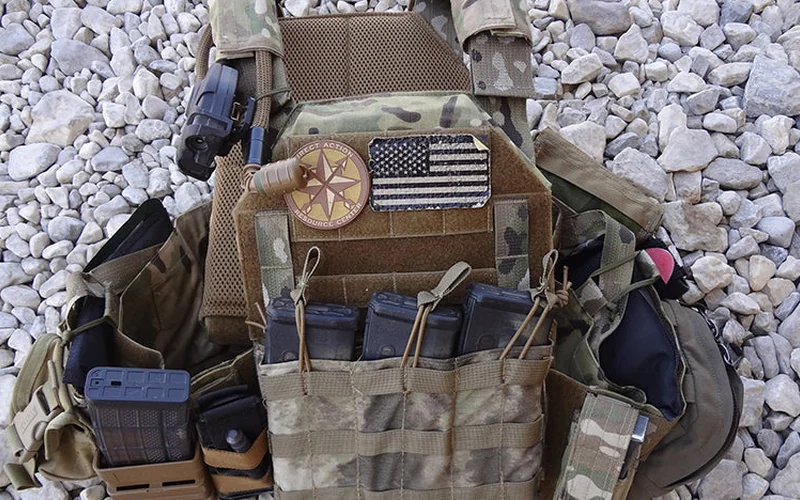
1–3 rifle magazine pouches or a placard
Front left / right
Pistol mag, light, multitool
Side or back
IFAK / trauma kit (reachable with either hand)
Back
Hydration or small admin pouch
Keep it light. Every extra pound is felt after an hour.
Chest Rig vs Plate Carrier
A chest rig carries gear but no armor. A plate carrier carries armor plates and gear. Some people wear a chest rig over a slick carrier to swap loadouts quickly.
Common Setup Mistakes
1
Plates riding too low and protecting the stomach instead of the heart and lungs.
2
Over-loading the front so you can't go prone.
3
Loose cummerbund that lets the carrier shift.
4
Mismatched plate sizes front and back.
FAQ
How high should a plate carrier sit?
Top of the front plate at the notch at the base of your neck.
What plates should I use?
Level III for lower weight or Level IV for armor-piercing protection. See Level III and Level IV plates.
Want it all matched?
Get a carrier with plates in one box: body armor kits.