Factory-Direct Prices · Duties & Taxes Included · 30-Day Returns
Home / Guides / What Is Body Armor Made Of?
Guide
What Is Body Armor Made Of?
Bulletproof vests are made of layers of high-strength fibers, usually aramid (such as Kevlar®) or ultra-high-molecular-weight polyethylene (UHMWPE), that catch and spread the energy of a bullet. Rifle plates add a hard strike face, usually ceramic or steel, to break up faster rounds.
How Body Armor Stops a Bullet
Soft armor works like a net: dozens of tightly woven or laminated fiber layers catch the bullet, deform it and spread its energy across a wider area. Hard plates first shatter or blunt the bullet with a hard face, then a fiber backer catches the fragments.
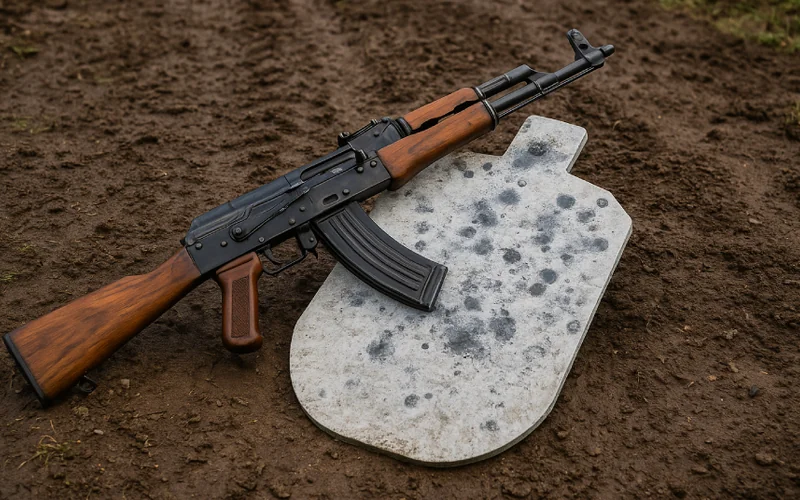
Body Armor Materials Compared
Material
Used in
Strengths
Trade-offs
Aramid (e.g. Kevlar®)
Soft vests, helmets
Proven, flexible, heat resistant
Heavier; loses strength when wet or exposed to UV, so needs a sealed cover
UHMWPE
Soft vests, Level III plates, helmets
Very light, water resistant, floats
Sensitive to high heat; stiffer
Ceramic (alumina, silicon carbide)
Level III+ / IV plates
Defeats armor-piercing rounds
Heavier; can crack if dropped
Steel (AR500-type)
Budget rifle plates
Cheap, durable, multi-hit
Very heavy; spall (fragmentation)
Is Kevlar Bulletproof?
No material is truly "bulletproof." Aramid fabric is bullet resistant when enough layers are combined and tested to a level such as IIIA. A single layer stops nothing. That's why the protection level, not the material name, is what matters.
What ArmorAces Uses
-
Soft vests and inserts – UHMWPE or aramid/UHMWPE hybrid Level IIIA panels
-
Helmets – aramid and UHMWPE shells
-
Level III plates – UHMWPE
-
Level IV plates – ceramic strike face with UHMWPE backer
Each product page lists the exact material. Test reports are on our certifications page.
FAQ
What are bulletproof jackets made of?
The same armor panels (aramid or UHMWPE) sewn inside a jacket shell.
Which is better, Kevlar or UHMWPE?
UHMWPE is lighter for the same level; aramid handles heat better. Both work when tested to the right level.
Why aren't steel plates recommended?
They're heavy and produce fragments unless coated. Ceramic or UHMWPE gives similar protection at less weight. See ceramic plates.